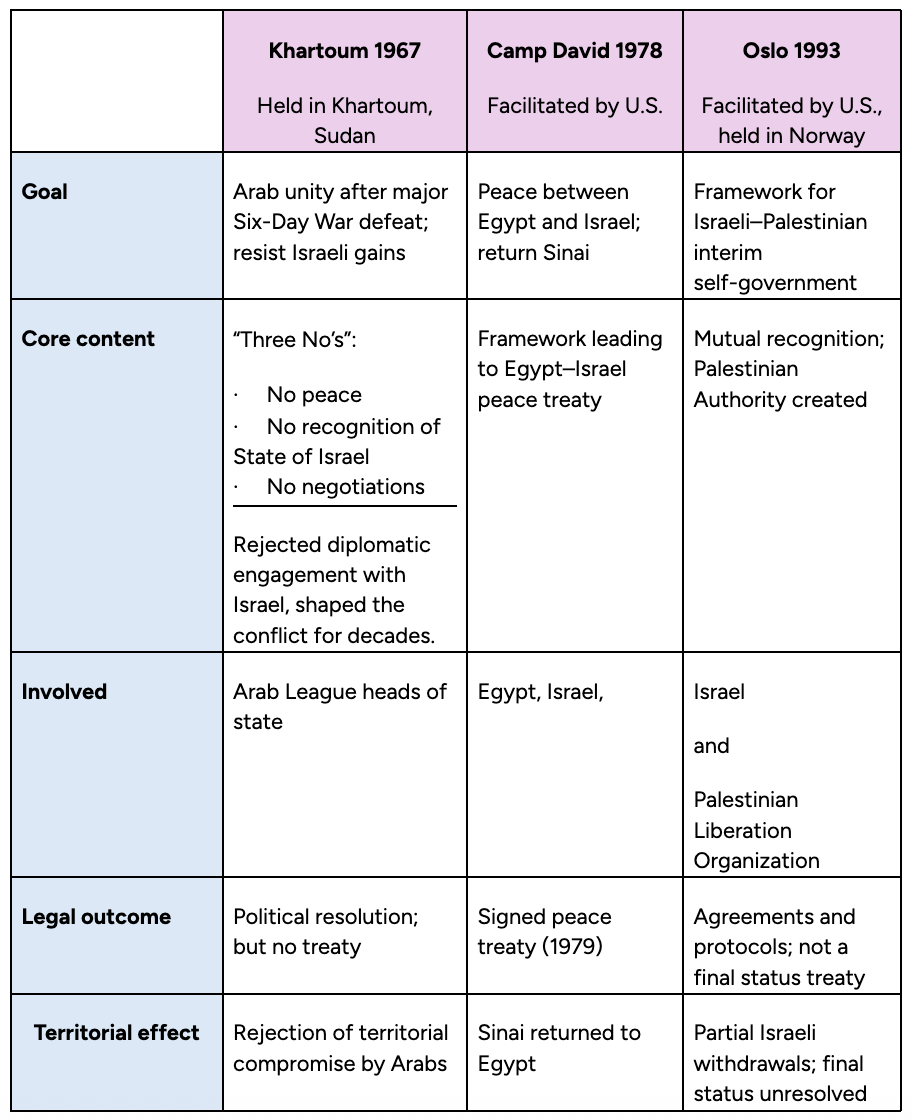
Have there been attempts at peace?

You can’t read or watch the news these days without mention of conflict in the Middle East. Well, it's been like that for decades . . . Have they even tried to get along?
Yes–with a variety of outcomes. These conversations are complex, shaped by political, military, and diplomatic factors that often pull different directions. Yet one issue stands above all others as a prerequisite for any meaningful dialogue: recognition of Israel’s right to exist as a nation. Without that foundation, a genuine conversation cannot even begin.
UN Partition Plan 1947: Two nations . . . Side by side
Since the re-establishment of Israel as a nation in 1948, waves of aliyah have brought thousands of Jews home again from around the world.
For the Jewish people, this is a dream come true . . . but not for the Arabs living in the land who had been told that victory was sure and the land would always be theirs. This of course, reignites conflict between Jews and Arabs as old as the Genesis accounts of Abraham’s sons.
To help solve this conflict, the world’s politicians looked for a solution for the competing nations. The United Nations proposed, The UN Partition Plan of 1947. (show here – two maps)
The two states were proposed to live side by side, with Jerusalem set up as a “corpus separatum”—a separate international city administered by the United Nations, in recognition of its deep spiritual significance for Jews, Christians, and Muslims alike.
Jewish leaders accepted this plan as a path toward statehood and as a way to live together in the land. Sadly, Arab leaders rejected the plan, even to this day. Even when their demands are met, almost to the letter, they refuse to acknowledge that the nation Israel has a right to exist.